I'm Shaurya, a Software Engineer from Delhi, India
I have strong expertise in Data Structures & Algorithms, System Design, Web Development, Machine Learning, and AI.

SELECTED WORK

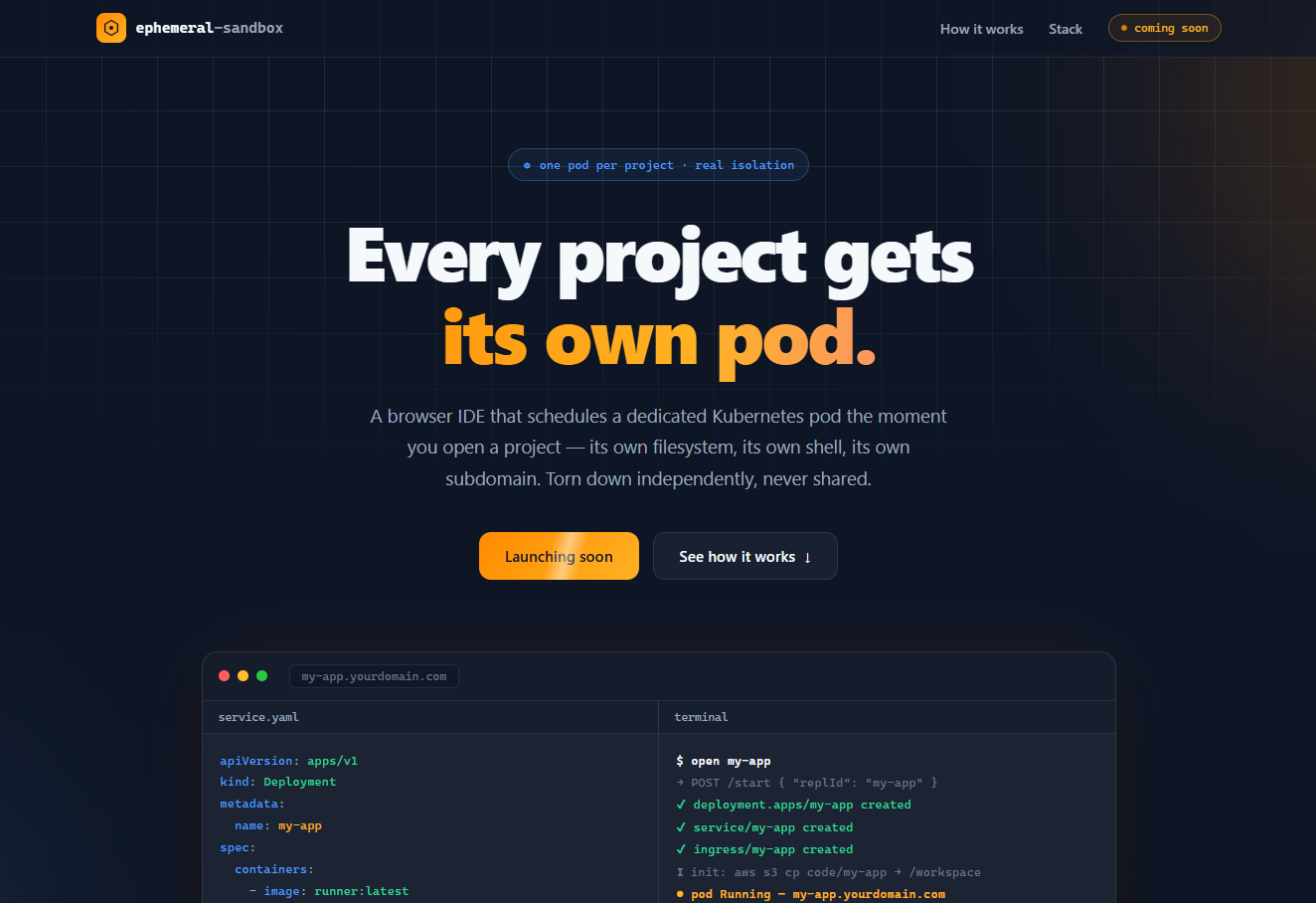
Ephemeral Sandbox Pod Scheduler
A browser IDE that provisions a real, isolated Kubernetes pod per project on demand — an init container seeds files from S3/R2, a live terminal and editor stream over Socket.IO, and nginx-ingress routes each project to its own subdomain.

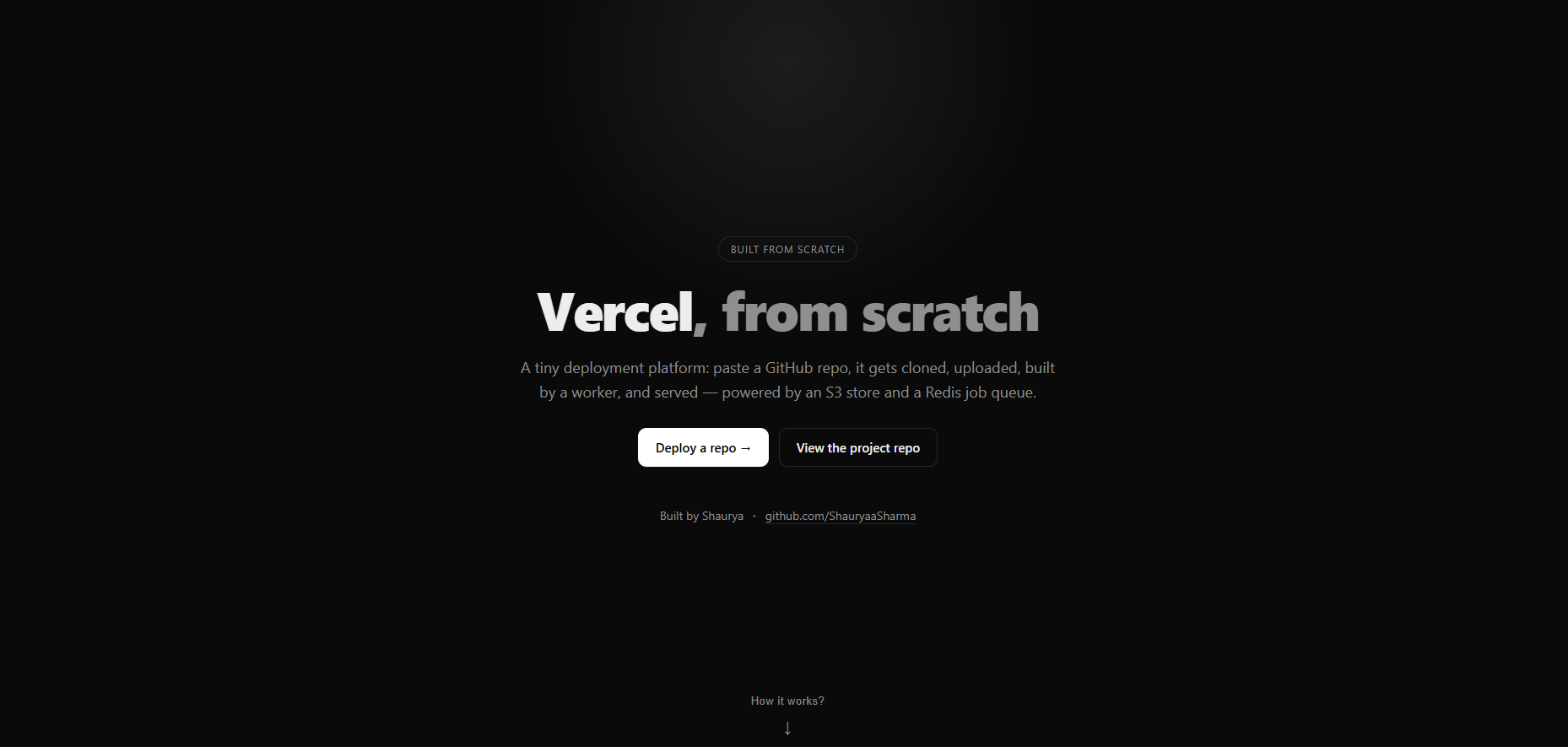
Vercel, From Scratch
A from-scratch clone of Vercel's deploy pipeline — paste a GitHub repo and it's cloned, queued, built, and served live, backed by a Redis job queue, S3 storage, and a multi-service Node.js backend.

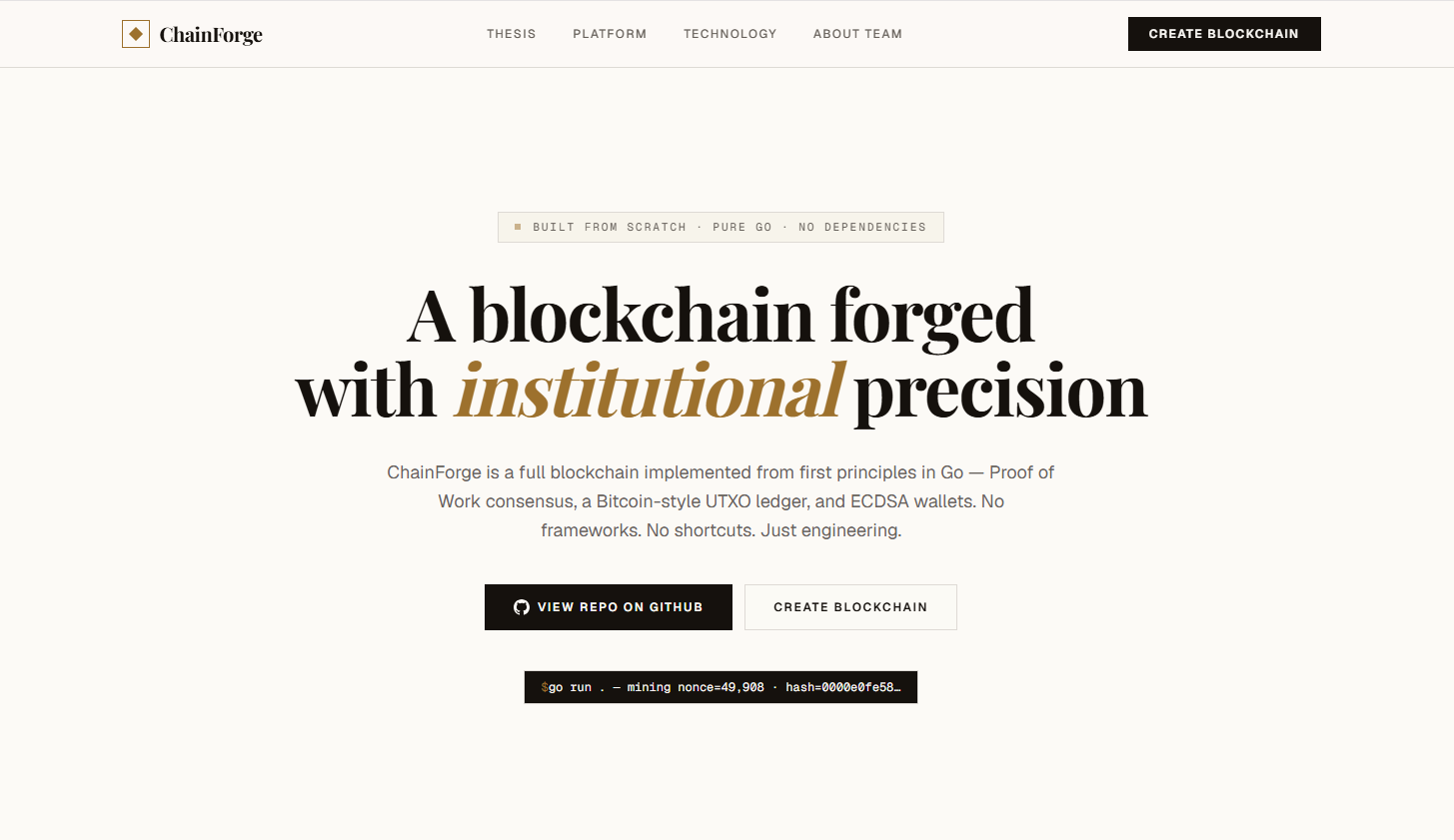
ChainForge
A from-scratch Bitcoin-protocol blockchain in Go, with real PoW, UTXO, ECDSA wallets, P2P networking, and a full React dashboard to explore it all.

Nexus - Realtime Chat
A real-time multi-user chat app in Go, with WebSocket-based messaging, a single custom connection pool for broadcasting

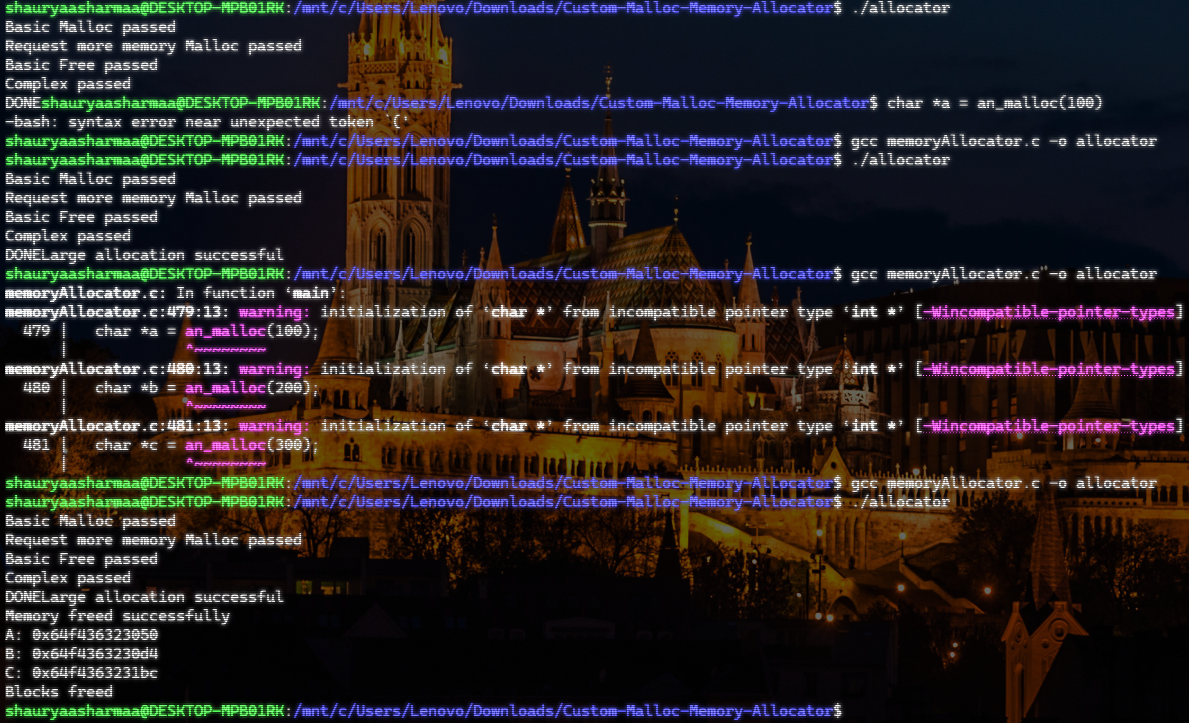
Custom Malloc Memory Manager
A memory manager from the ground up. From-scratch implementation of malloc and free in C, managing real heap memory with sbrk/brk, splitting and merging blocks, and growing or shrinking the heap dynamically.

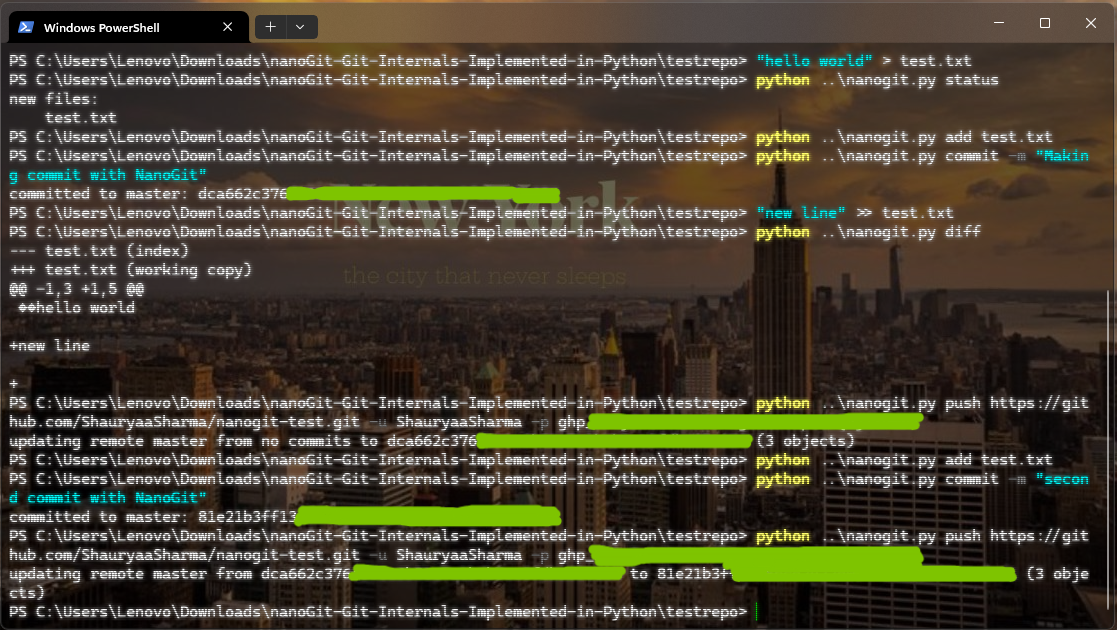
NanoGit — Git Internals in Python
A minimal Git client built from scratch in pure Python — object hashing, binary index parsing, tree and commit writing, and pack file pushing over the HTTP Smart Protocol. Supports init, add, commit, diff, status, and push to GitHub.
OPEN SOURCE

fix(client): infer moduleFormat correctly for nodenext/node16 in CJS projects
The prisma-client generator inferred moduleFormat by checking only whether tsconfig's module was literally "commonjs", treating node16/nodenext as ESM — but under nodenext, tsc actually decides CJS vs ESM per file from the nearest package.json's type field. CJS projects on nodenext (common for NestJS backends) got an ESM-only client with import.meta.url that crashed at runtime once required(). Fixed inferModuleFormat to look up the nearest package.json and default to cjs unless type is explicitly "module".

fix(ts-sdk): re-raise LLM extraction transport failures instead of returning []
Memory.add()'s LLM extraction step caught all errors from generateResponse — rate limits, timeouts, connection failures — and swallowed them by returning [], making an unreachable LLM indistinguishable from an empty extraction. Added a typed LLMError re-raised with the original error as .cause, plus regression tests mirroring the Python-side fix.
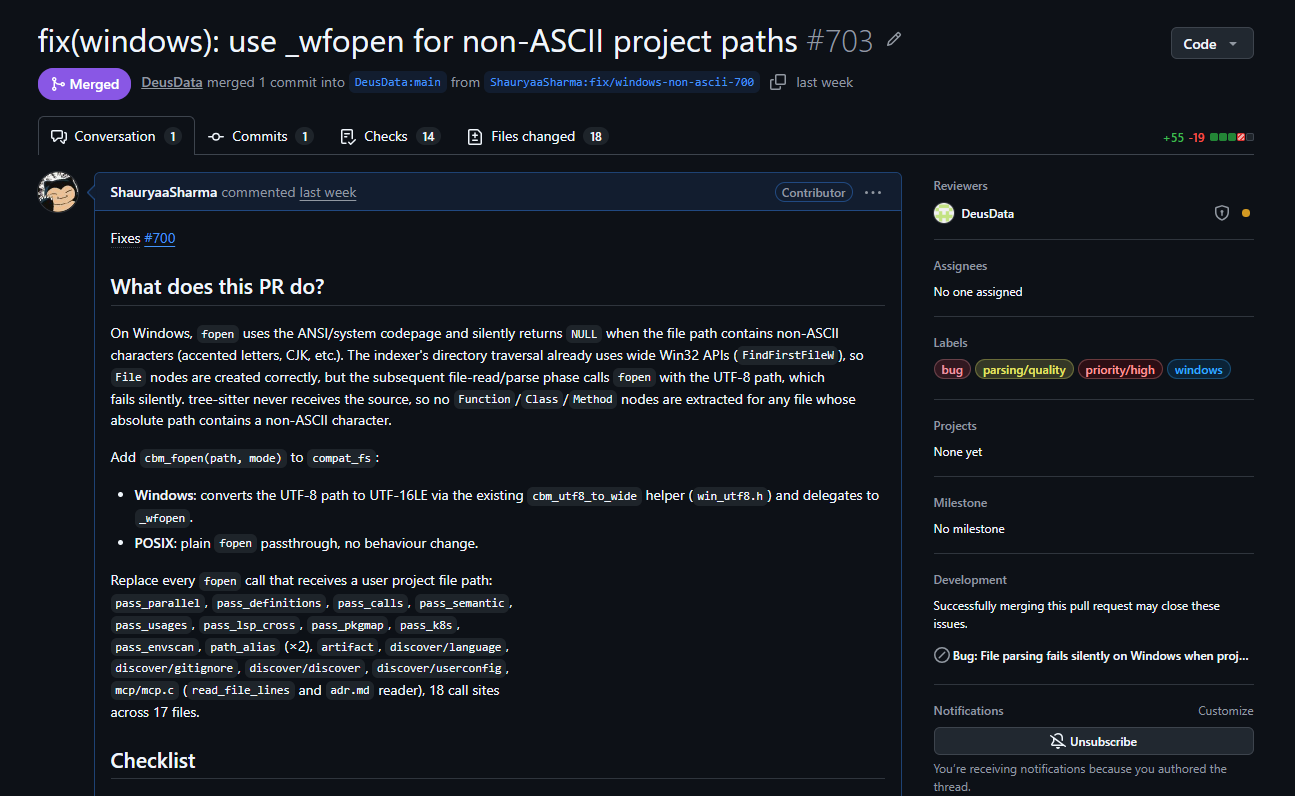
fix(windows): use _wfopen for non-ASCII project paths
On Windows, fopen uses the ANSI codepage and silently returns NULL for accented/CJK paths, so tree-sitter never received the source and no Function/Class nodes were extracted. Added cbm_fopen — UTF-8 → UTF-16LE via _wfopen — replacing 18 call sites across 17 files.
fix(discover): honor .git/info/exclude during file discovery
The indexer honored .gitignore but ignored .git/info/exclude, so sandbox/agent worktrees got walked in full (661k files / 170 GB → OOM). Added cbm_gitignore_merge() so cbm_discover_ex loads and merges the exclude patterns, with unit + integration tests.
fix(windows): quote CreateProcessW args, unswallow installer failures, document MotW
Fixed three Windows installer failures: Mark-of-the-Web blocking install.ps1, swallowed config errors (now a $LASTEXITCODE check), and malformed taskkill /FI quoting. Replaced _spawnvp with CreateProcessW plus a UTF-8-correct MSVC-convention quoting helper.
Take a look at my past experience
See full resumeStudent Teacher & Python Programming Fellow
Selected among 66,000+ students for Stanford University’s Code in Place program, completing a rigorous Python curriculum with mentorship from Stanford instructors.
Software Engineering Intern
Developed secure fintech solutions involving payment gateways, OTP authentication, encryption workflows, and REST API integrations for global clients across the US and Latin America. Improved checkout performance through A/B testing, implemented AES/RSA-based security systems, and built cross-platform communication templates using React, TypeScript, JavaScript, and Postman.
Frontend Engineering Intern
Enhanced the WordPress-based platform using HTML, CSS, TailwindCSS, JavaScript, and ReactJS, improving user experience and SEO structure.

Who's behind all this great work?
Software engineer and AI enthusiast focused on scalable systems, full-stack development, machine learning, and impactful real-world innovation.
3 Research Publications
Published research papers in Big Data, Next Generation Communication System, Medical Imaging and Computer Vision.
4× Hackathon Winner
Winner of my College's biggest hackathon and State level qualifier of India's biggest hackathon, Smart India Hackathon.
What people I've worked with say.
Testimonials

Shaurya's Internship report looks excellent to me. His incredible work on the projects during his internship with us is very much appriciated! His dedication and skill truly shone through in every task, and the improvements he implemented have made a significant impact on the user experience. From tackling complex coding challenges to meticulously refining the interface, his contributions were invaluable. We were particularly impressed with his ability to quickly grasp new concepts and your proactive approach to problem-solving. We're so glad he chose to spend his internship with our team. We wish him all the best in his future endeavors!
Articles & Writing
Browse all articles
I'm Building Vercel From Scratch. Here's Phase One.
Phase one of a from-scratch Vercel clone: the Ingestion Service that clones a GitHub repo, uploads it to R2, and queues it for the build worker.

The Bug That Failed Without Failing: My Journey Fixing a Silent Windows Bug in Open Source
A user's accented folder name silently broke file parsing on Windows — the files were found, but never understood. Here's the fix.